If you’ve ever stood beside a pool looking at a patch of bare ground and tried to figure out what to do with it, you’ve probably wrestled with this exact question.
Do you pave it, or plant it? Both options have their champions, both come with real costs, and both can look genuinely beautiful – but they perform very differently when it comes to long-term value and ongoing expense.
Anyone planning pool landscaping in Perth projects or pool surrounds anywhere else in the world will face this same trade-off, and the answer isn’t as simple as most people expect.
The honest answer is that neither hardscape nor planting is categorically cheaper. What matters is how you approach each option, what your specific site demands, and how much ongoing time and money you’re willing to commit. Let’s break it down properly.
What we mean by hardscape around a pool
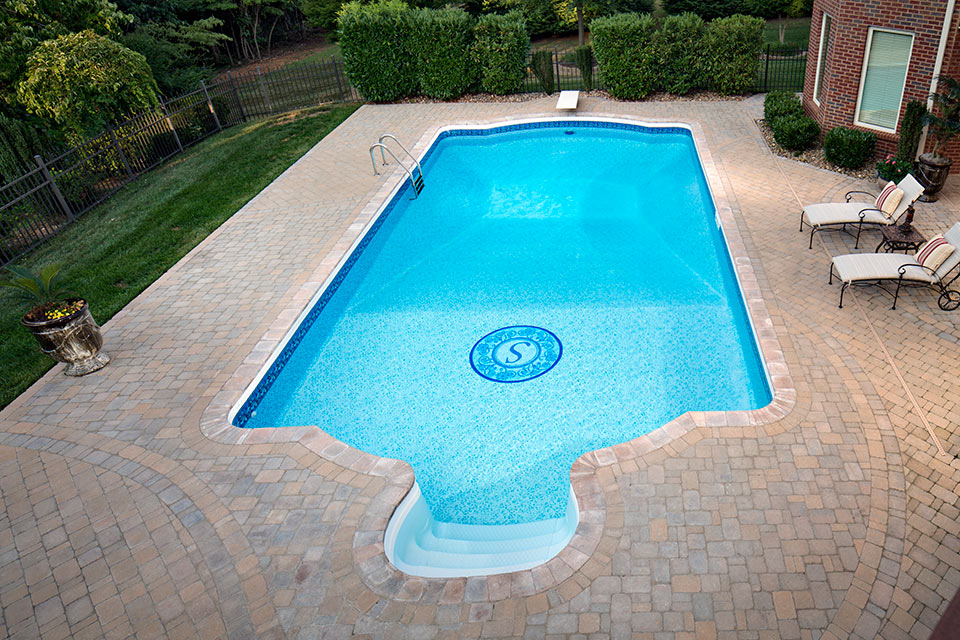
Hardscape covers any non-living element in the outdoor space – paving, concrete, decking, pavers, gravel, feature walls, and similar materials.
Around a pool, the most common hardscape choices are poured concrete, natural stone pavers, porcelain tiles, and timber or composite decking.
These surfaces define the usable area around the pool, provide safe non-slip footing, and determine much of the aesthetic character of the space.
They’re also the elements that tend to carry the highest upfront installation cost.
The upfront cost reality for each approach
Hardscape is almost always more expensive to install than planting. Quality paving, natural stone, or composite decking around a pool requires precise preparation, appropriate sub-base work, skilled installation, and materials that need to handle constant moisture, sun exposure, and chemical splash.
Planting, by contrast, can be done in stages and adjusted over time. You can start with groundcovers and a few feature plants and build the garden out as budget allows.
The initial outlay is typically lower, and mistakes are more forgiving – a plant that doesn’t thrive can be replaced for a fraction of what it costs to relay a section of paving.
That said, cheap planting choices made without regard for the pool environment can become expensive problems. Certain plants drop leaves, seeds, or sap directly into the water, dramatically increasing cleaning and filtration costs.
Others have aggressive root systems that can damage pool surrounds or underground pipes over time.
Choosing the wrong plants isn’t just an aesthetic issue – it has real ongoing cost implications.
Ongoing maintenance: where the real cost difference lives
This is where the comparison gets interesting. Hardscape has a higher upfront cost but, if installed well, a very low ongoing maintenance requirement. Paving doesn’t need watering, feeding, pruning, or replacement.
A good quality paved surround might need a clean, a re-sand of joints every few years, and occasional sealing depending on the material – but that’s genuinely modest compared to the work a planted garden requires.
Planting requires consistent attention. Watering, fertilising, pruning, mulching, and replacing plants that die or outgrow their space are ongoing tasks that either cost time or money depending on whether you’re doing it yourself or paying someone else.
In a hot, sunny environment – common for outdoor pool areas – that maintenance load can be significant.
However, a well-chosen planting scheme using drought-tolerant, low-debris species in appropriate locations can be remarkably low-maintenance once established.
The key phrase there is ‘well-chosen’ – which usually means getting good advice upfront rather than picking plants based on looks alone.
How each option affects pool running costs
This is an angle most homeowners overlook entirely, and it can swing the economics significantly.
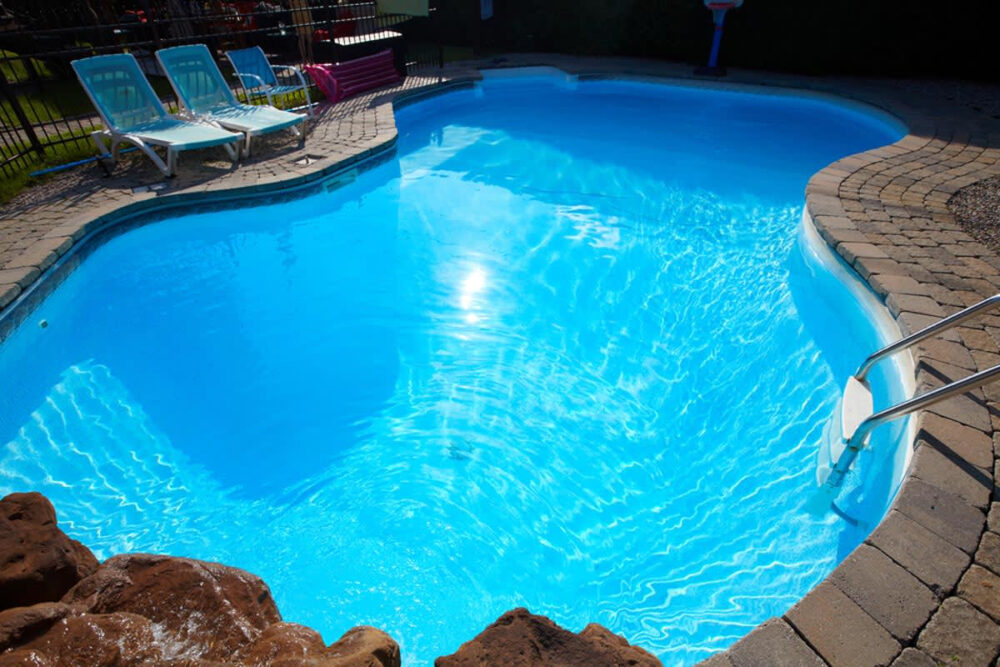
Plants near a pool introduce organic debris – leaves, flowers, seeds, and pollen – that ends up in the water. More debris means more filtration run time, more chemical use to maintain water balance, and more time spent skimming and vacuuming.
Over a full year, that added load on your pool system adds up to real money.
Hardscape, by contrast, contributes nothing to the pool’s organic load. A paved surround that’s hosed down regularly is about as pool-friendly as you can get from a water quality and filtration perspective.
The counterpoint is heat. Large expanses of dark paving or concrete absorb heat, which raises the surface temperature around the pool and can contribute to higher water evaporation.
Light-coloured or reflective paving materials mitigate this, but it’s a factor worth considering in warmer climates.
Longevity and durability: thinking in decades, not years
Quality hardscape around a pool, properly installed with appropriate materials, should last 20 to 30 years or more with minimal intervention. Natural stone can last a lifetime.
Composite decking typically carries warranties of 25 years or longer. The upfront investment, spread over the lifespan of the product, often works out to be very reasonable cost-per-year.
Planting doesn’t have the same kind of predictable lifespan. Plants grow, change, sometimes die, and occasionally outgrow their intended space entirely.
A garden that looks perfect at year three may need significant intervention by year eight. That’s not a reason to avoid plants – it’s just a reality of working with living material.
The case for combining both thoughtfully
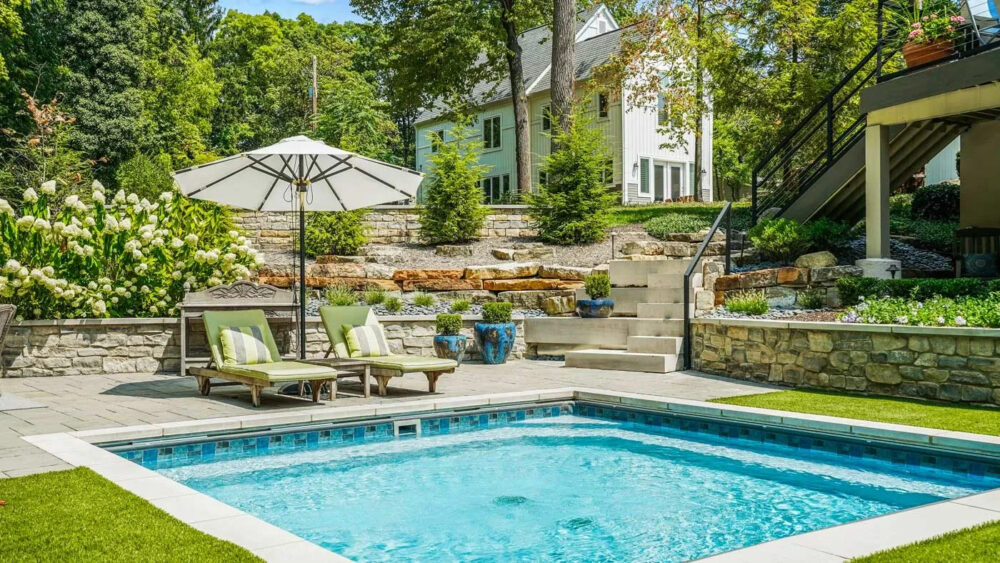
The most cost-effective pool surrounds tend to combine hardscape and planting strategically rather than choosing one or the other exclusively.
Paved areas directly adjacent to the pool handle the high-traffic, high-splash zones where maintenance needs to be minimal and safety is a priority.
Planting is placed further from the pool edge – in borders, raised beds, or screening positions – where it adds softness and privacy without dropping debris into the water.
This approach captures the aesthetic benefits of both, manages ongoing costs sensibly, and gives you a pool area that’s genuinely enjoyable rather than one that looks either clinical or overgrown.
The plants chosen for the border positions should be specifically selected for low debris, non-invasive roots, and tolerance of reflected heat and occasional chlorine splash.
This is where a landscaper’s knowledge of plant behaviour and pool environments is genuinely useful – the wrong choice in the wrong position creates ongoing problems, while the right choice does its job quietly for years.
Which saves more money? The honest answer
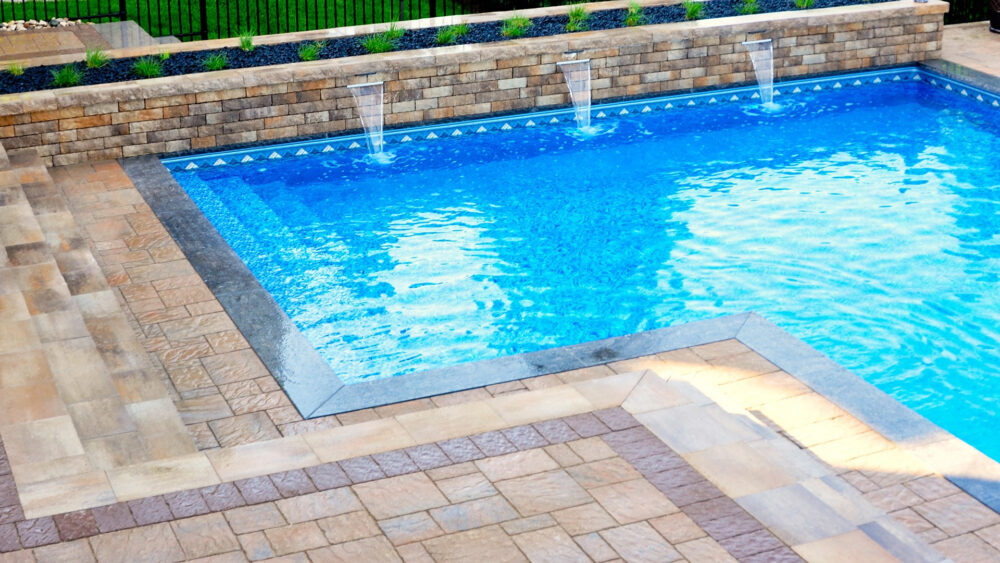
Hardscape saves more money in the long run for the areas closest to the pool. The upfront cost is higher, but the ongoing maintenance, pool running costs, and longevity all favour hard surfaces in high-use pool-adjacent zones.
Planting saves money upfront and adds genuine character to the space – but only when the right species are placed in the right positions with a clear-eyed understanding of what they’ll require over time.
Done well, a planted pool garden is beautiful and manageable. Done carelessly, it becomes a recurring expense.
The smartest pool surrounds use both. Invest in quality hard surfaces where they matter most, and be selective and informed about where and what you plant.
That combination gives you the best of both worlds without the worst costs of either.