
Key Takeaways
- Many Sub-Zero cooling issues are caused by dirty condenser coils or restricted airflow
- Atlanta’s heat and humidity can put extra strain on built-in refrigerators
- Water leaks are often related to clogged drain lines or loose water connections
- DIY troubleshooting is appropriate for cleaning and visual inspections, not sealed system or electrical repairs
- If your unit displays error codes, stops cooling completely, or makes loud compressor noises, it is time to call a qualified technician
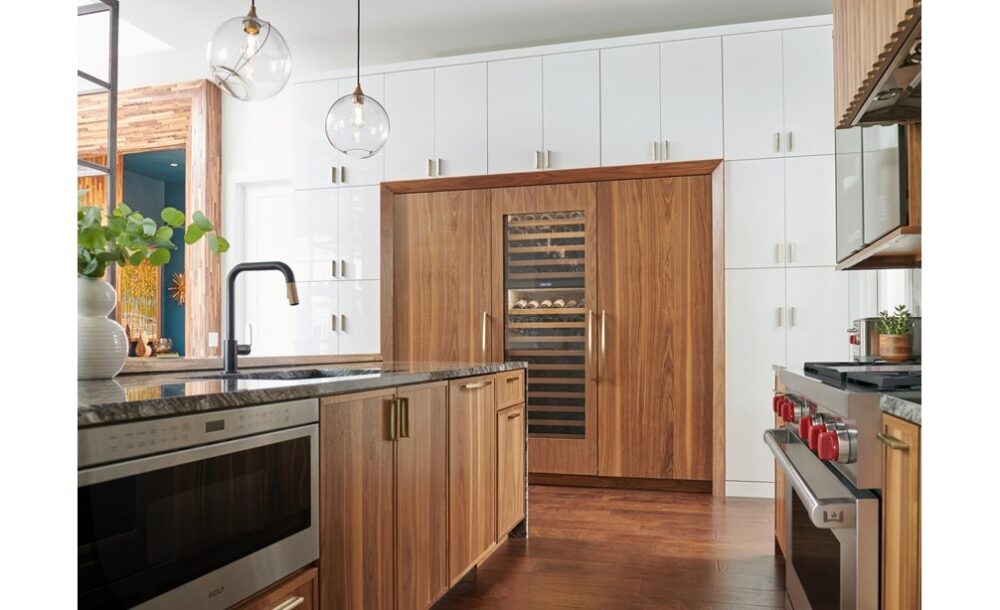
If you own a Sub-Zero refrigerator in Atlanta, you already know it is not just another kitchen appliance. In many homes across Buckhead, Sandy Springs, and Midtown, these built-in units are part of a carefully designed kitchen and a long-term investment.
When something feels off, whether it is warmer milk, melting ice cream, or an unfamiliar noise, it can be stressful. Before you assume the worst or schedule Sub-Zero refrigerator repair in Atlanta, there are several practical troubleshooting steps you can safely handle yourself.
Some problems are surprisingly simple. Others are early warning signs that professional service is the smarter move. This guide will help you tell the difference.
Why Sub-Zero Refrigerators Require a Different Approach
From experience, Sub-Zero refrigerators are engineered differently from standard models. They typically include:
- Dual refrigeration systems for separate fridge and freezer cooling
- Advanced air purification
- Precise digital temperature controls
- High-performance compressors
This design is one reason they last so long. The downside is that repairs require a more thoughtful approach. Basic maintenance is homeowner-friendly, but sealed system repairs, refrigerant handling, and control-board diagnostics are not. Those require specialized tools and certifications.
Step 1: Start With the Simple Checks
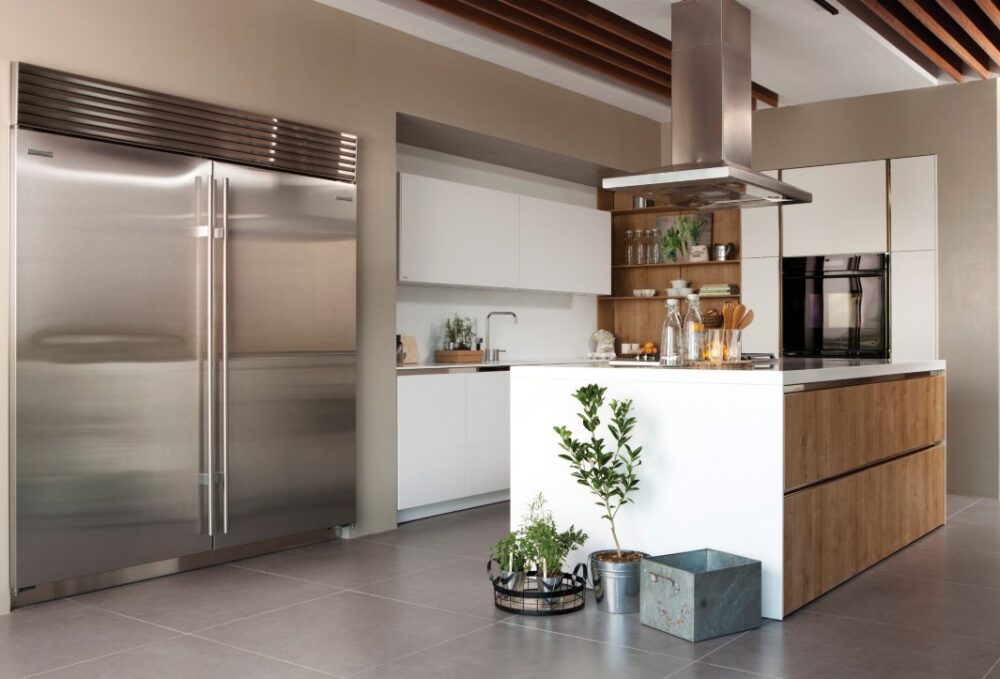
Based on experience, many service calls begin with minor issues that could have been resolved in minutes. Start here before assuming you need professional Sub-Zero refrigerator repair in Atlanta.
1. Confirm the Power Supply
Always check the following:
- Is the refrigerator firmly plugged in
- Has the breaker tripped
- Are the interior lights working
Atlanta summer storms and power flickers can trip breakers without notice. If the breaker continues to trip after resetting, stop troubleshooting. Repeated electrical faults require professional diagnosis.
2. Double-Check the Temperature Settings
Sub-Zero controls are precise. Recommended settings are:
- Refrigerator around 38°F
- Freezer around 0°F
Settings can be bumped during cleaning or grocery loading. It is a small issue, but a common one.
Step 2: Clean the Condenser Coils
If there is one maintenance task that solves the most Sub-Zero complaints in Atlanta, this is it. Built-in units rely on controlled airflow. When coils collect dust, pet hair, or pollen, cooling efficiency drops quickly.
Why It Matters in Atlanta
Georgia heat forces refrigerators to work harder. Dirty coils can cause:
- Overheating
- Longer compressor cycles
- Higher energy use
- Inconsistent cooling
How to Clean Them Safely
- Turn off the refrigerator
- Remove the top grille panel
- Use a soft brush and vacuum to remove buildup
- Reinstall the grille and restore power
Avoid water or cleaning sprays. Cleaning every three to six months can prevent major repair bills.
Step 3: Inspect the Door Gaskets
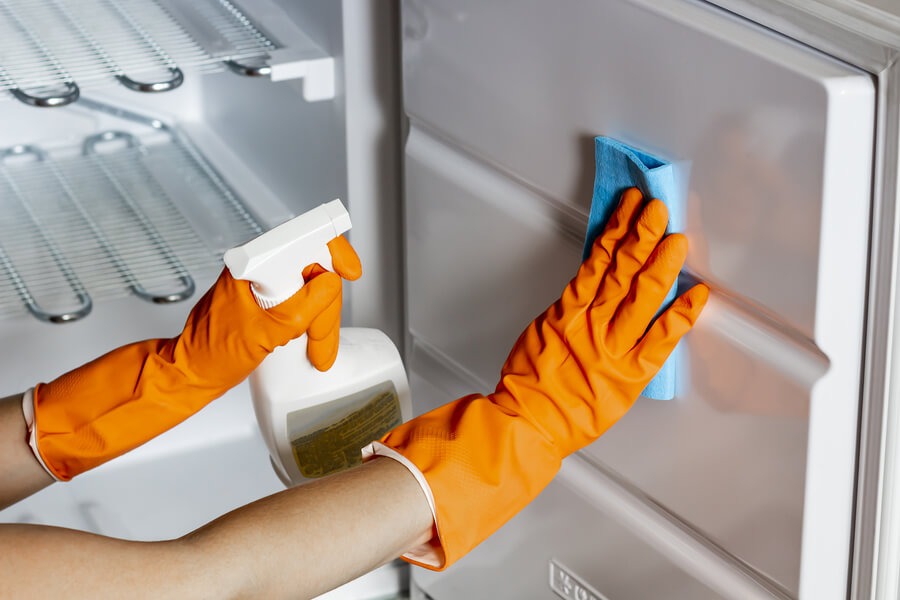
Atlanta humidity can shorten the lifespan of door seals. Weak gaskets allow warm air inside, leading to:
- Frost buildup
- Temperature swings
- A compressor that runs constantly
A Simple Home Test
Close the door on a dollar bill and pull gently. If it slides out easily, the gasket may need replacement. Gasket replacement can be manageable if done carefully and evenly.
Step 4: Address Water Leaks Early
Alt text: Homeowner kneeling on a hardwood floor, inspecting a small pool of water beneath a built-in stainless steel refrigerator in a bright, modern kitchen.
Water around a built-in refrigerator should never be ignored. Common Atlanta causes include:
- Clogged defrost drains
- Frozen drain lines
- Loose water supply connections
- Aging water filters
What You Can Safely Check
- Look behind the unit for loose connections
- Inspect for visible ice buildup
- Replace overdue water filters
If water is pooling beneath cabinetry or coming from hidden areas, stop and call for service.
Step 5: Listen to What Your Refrigerator Is Telling You
Sub-Zero units are typically quiet. New or loud sounds can signal trouble:
- Repeating clicking
- Loud buzzing from the compressor area
- Constant running without cooling improvement
- Rattling from loose panels or fans
A light hum is normal. Sudden or loud changes are not. Avoid opening internal electrical compartments.
Step 6: Check for Error Codes
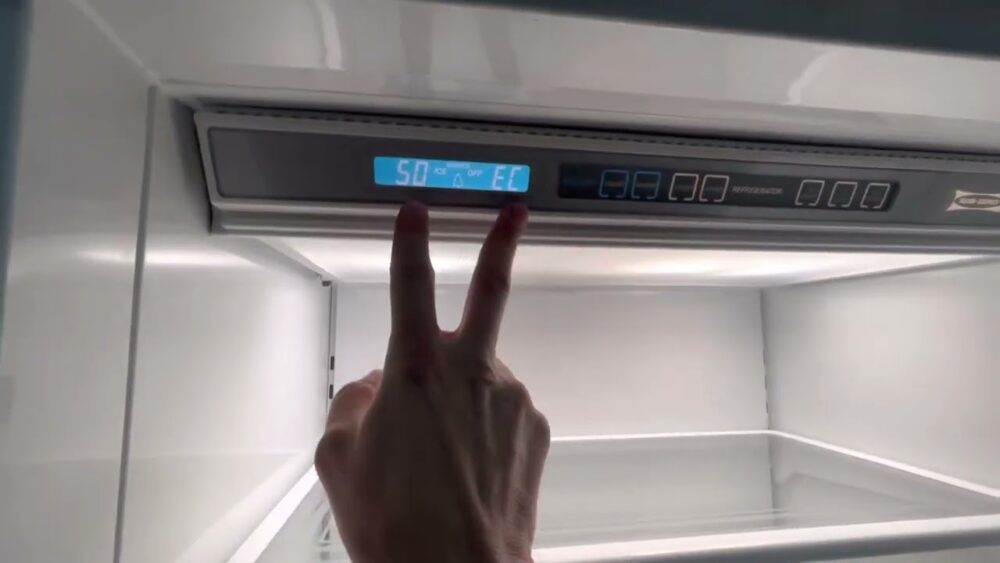
Modern Sub-Zero refrigerators display service codes when problems occur.
- Check the owner’s manual
- Power the unit off for five minutes
- Restore power and monitor
If the code returns, professional diagnostics are required.
When It Is Time to Call for Sub-Zero Refrigerator Repair in Atlanta
Contact a qualified technician if you notice:
- No cooling at all
- Freezer thawing
- Burning smells
- Repeated breaker trips
- Loud compressor noises
- Signs of refrigerant leakage
Sealed system repairs require EPA certification and should never be attempted by homeowners.
How Atlanta’s Climate Affects Sub-Zero Performance
Living in Atlanta means dealing with:
- Long, hot summers
- High humidity
- Heavy pollen seasons
Heat extends cooling cycles, humidity stresses seals, and pollen accelerates coil buildup. Preventative maintenance is especially important in this region.
What to Expect from a Professional Service Visit
A technician will typically:
- Inspect and clean the condenser system
- Test compressor performance
- Evaluate evaporator fan motors
- Check sensors and thermistors
- Run control system diagnostics
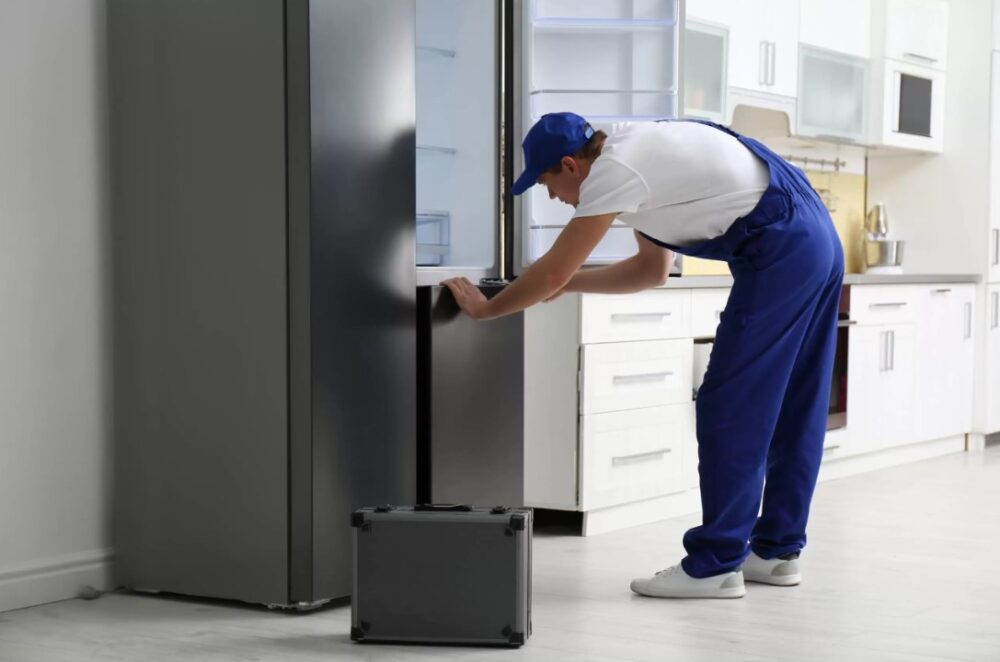
Built-in units may require additional labor due to cabinetry integration, but repair is often worthwhile.
Choosing the Right Sub-Zero Repair Service in Atlanta
Look for providers with:
- Experience servicing Sub-Zero models
- Genuine replacement parts
- Clear diagnostic pricing
- Labor and parts warranties
Luxury built-in systems require specialized knowledge.
Preventative Maintenance Checklist for Atlanta Homeowners
- Clean condenser coils every three to six months
- Replace water filters on schedule
- Inspect door seals twice yearly
- Keep interior vents unobstructed
- Avoid overloading shelves
Homeowners who follow this checklist rarely experience sudden failures.
Frequently Asked Questions
Final Thoughts
Sub-Zero refrigerators are built for longevity. With proper maintenance, they can serve Atlanta homeowners for decades. Start with safe troubleshooting steps, and know when to call a professional. Early attention can prevent costly repairs and protect your investment.